Frequently Asked Questions
The most-asked questions about probability and stochastic processes.
What exactly is probability and stochastic processes?
Probability is the mathematical framework for quantifying uncertainty about outcomes, while stochastic processes extend that framework to systems evolving randomly over time. Together they form the backbone of modeling anything from coin flips to stock prices to particle diffusion.
Who are the central figures in this field?
The key names include Jacob Bernoulli and Abraham de Moivre for early combinatorial probability, Thomas Bayes and Pierre-Simon Laplace for inference, Andrey Markov for chains, Norbert Wiener and Paul Lévy for continuous-time processes, and Andrey Kolmogorov for the axiomatic foundation that unified the field in the 1930s.
Where should a newcomer start learning?
A solid entry point is a first course in probability covering random variables, expectation, and common distributions, followed by an introductory stochastic processes text walking through Markov chains, Poisson processes, and Brownian motion. Community recommendations often point to Grimmett & Stirzaker or Durrett as accessible yet rigorous choices.
What is a Markov process and why is it so central?
A Markov process is a stochastic system whose future evolution depends only on its current state, not on the path that led there. This memoryless property makes the mathematics tractable while still capturing a vast range of real-world dynamics, from web-page surfing to molecular folding.
What is Brownian motion and why does it matter so much?
Brownian motion is the canonical continuous-time, continuous-path stochastic process originally describing the erratic drift of pollen grains in fluid. It serves as the building block for Itô calculus and underpins much of modern mathematical finance, statistical physics, and random PDE theory.
What is a martingale in plain terms?
A martingale is a stochastic process whose expected future value, given all information available now, equals its current value—meaning no predictive edge exists. They are the theoretical workhorse behind fair-game analysis, optional-stopping theorems, and the pricing formulas used in quantitative finance.
Why is the Central Limit Theorem considered a landmark result?
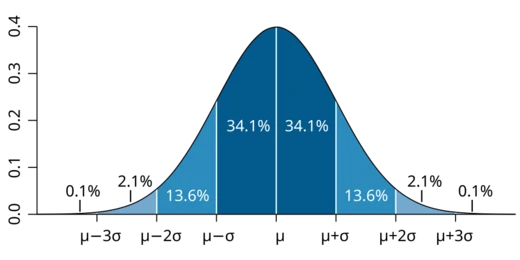
The CLT states that the properly normalized sum of many independent random variables converges to a Gaussian distribution regardless of the original distribution's shape. It is frequently cited as the single most consequential result in probability because it explains the ubiquity of the bell curve in measurement, biology, and engineering.
How does Itô calculus differ from ordinary calculus?
Itô calculus extends differentiation and integration to functions of Brownian motion, introducing a correction term (½f″ dt) that has no analogue in smooth deterministic calculus. Developed by Kiyoshi Itô in the 1940s, it is now the standard language for stochastic differential equations and their applications.
What real-world applications do fans most often highlight?
Stochastic modeling appears in quantitative finance (Black–Scholes option pricing), population genetics, epidemiology (random SIR transmission), queuing theory for call centers and server farms, and statistical physics (diffusion and phase transitions). Each area treats randomness not as noise to discard but as the essential signal to model.
What common misconception about randomness does the field correct?
The gambler's fallacy—the belief that a long streak of one outcome makes the opposite outcome 'due'—is the most frequently debunked error. In truly independent trials, each event's probability is unaffected by prior results, a point the Law of Large Numbers clarifies by showing convergence of relative frequencies rather than a balancing of outcomes.